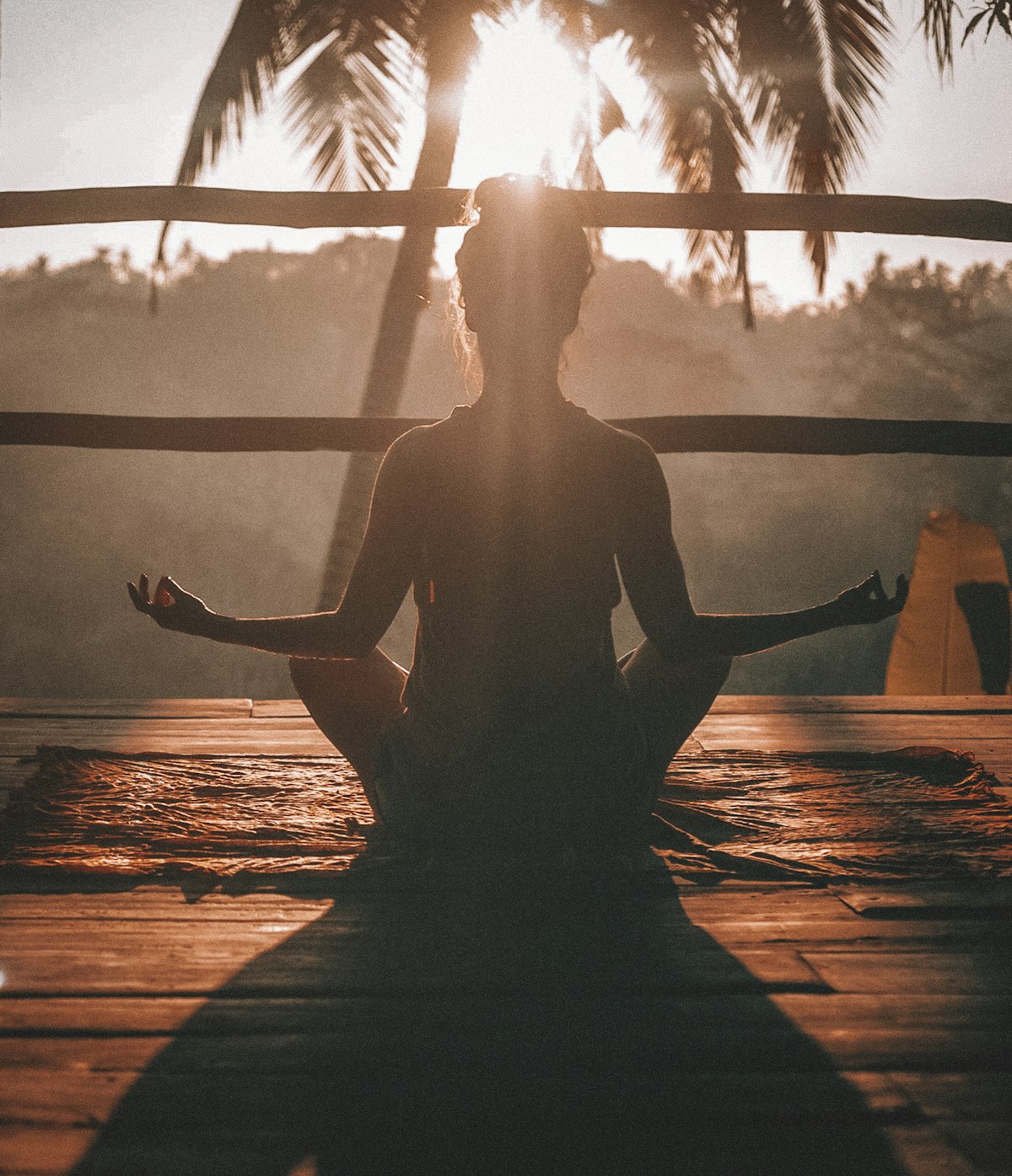
A person sitting alone in dim light, shoulders folded, in the quiet after.

Who Apologizes to Your Body?

Quiet RitualsSelf-MercyAfter MidnightThe BodySmall Acts

Tuesday, 10:47pm. The kitchen floor is cold against your bare feet, and the refrigerator hums its one long note, the way it always does at this hour. You are standing in front of the open freezer with your shoulders folded forward, your jaw tight, both hands gripping the edge of the door. The light falls across your face in a pale slab. You are not hungry. You are not getting ice for a drink. You are getting it for the part of you that hurts.

Your shoulders hurt. They have hurt for three hours, since the moment you told yourself one more rep, then one more, then one more, until the word more stopped meaning anything and just became a sound you made at the back of your throat. Your knees hurt in a way that has nothing to do with injury and everything to do with the way you punish yourself when no one is watching. The small of your back has gone stiff. Your palms are still sweating from the bar.

You pull the pack from the freezer. It is soft, the kind of soft that comes from something designed to bend. It has been in the back corner behind the frozen peas for weeks now, and you keep it there, in the same spot, the way you keep a lot of things in the same spots so the dark does not have to think. The cold bites into your fingers first. Then it bites into your wrist. Then you press it, gently, against the place where the muscle has knotted itself into something that no longer feels like a muscle.

You close your eyes.

Here is what you do not know, or what you do know but do not say: this is the softest thing you will do today. The work, the calls, the inbox, the small performances of being fine — those are not soft. Those are the things you do for other people. The thing you are doing right now, in the blue light of an open freezer at 10:47pm on a Tuesday, with your shoulders curved and your face turned away from nothing in particular, this is the only hour of your day that belongs to you. And you spend it pressing cold against the body you have just spent an hour trying to break.

Who taught you that?

Not the trainers. Not the app. Not the voice in the video that said push harder, you’re doing great, come on, one more. That voice was selling you something, and you bought it, and now your hands are shaking as you hold the pack against the curve of your shoulder. The voice did not teach you to put the pack back when you were done. The voice did not teach you to stand here in your socks on cold tile. The voice did not teach you to wait until the burning became the kind of burning you could forgive.

Someone taught you that. Maybe your mother, who used to press a wet cloth to your forehead when you came home from school with that look on your face. Maybe your first roommate, who said, very quietly, you don’t have to finish the workout if it hurts. Maybe no one. Maybe you taught yourself, slowly, by trial, the way you teach yourself anything you were not given — by noticing that you needed it.

This is the thing about the after. The after is where the truth lives. During, you are performing. Before, you are planning. But after, when the gym bag is on the floor and your shirt is damp and the only light is the one leaking from under the freezer door, you are finally alone with yourself. And the question you ask in that alone-ness is not was the workout good. The question is was I good to the body I am leaving with.

You press the pack harder. Your breath goes shallow. The burn is starting to fade into numbness, which is what you wanted, which is what you always wanted, which is also the part you will not tell anyone.

I know this sounds small. I know you are thinking, it is just a pack. It is just ice. It is just ten minutes in a kitchen after a workout that nobody asked you to do. But you are wrong about that, and I want to tell you why.

Because it is not the workout. The workout is the easy part. The workout has music and a clock and a goal. The workout has a version of you that is moving, that is producing, that is checking the box. The workout is the part where you are allowed to take up space, because taking up space is what the workout is for.

It is the after that is hard. The after is the part where no one is watching, no one is counting, no one is going to give you a small victory chime. The after is the part where you have to decide, all by yourself, whether the body you dragged through the workout is worth treating with something gentle. And you do. Every time. You drag out the pack, you hold it in your hands until it stops shocking you, you press it against the place that hurts, you stand there until your breathing evens out. You do this even though there is no one there to see you doing it. You do this even though you could just go to bed and let the ache settle into the sheets.

Why?

Because you have learned — somewhere, from someone, from no one — that you are not allowed to skip the mercy. That skipping the mercy is the thing you are not allowed to do. That the mercy is the smallest, quietest, most unphotographed part of being alive, and that if you do not give it to yourself, no one else is going to come into your kitchen at 10:47pm and press cold against the place where you tore.

But here is the contradiction I keep thinking about, the one that keeps me up some nights: you do not extend this mercy to anyone else. Or, you do, but only after you have given it to yourself, and only if there is time. You tell your friends to stretch. You tell them to sleep. You tell them to take a rest day, and you mean it when you say it, but you also do not really mean it, because you have a workout at six and you will go whether or not you should, and somewhere inside you, you have decided that you are the one who is allowed to skip the gentle parts.

You are not.

That is the part I want you to hear. Not as a lecture. Not as advice. Just as the truth I keep seeing in the kitchen at 11pm when you open the freezer and do not look at yourself in the chrome of the door.

The pack is starting to warm. It does that. It starts cold and sharp, then it softens, then it becomes something your hand is just holding, and the cold is no longer something happening to your skin but something your body is being held inside of. Your shoulders drop a quarter inch. Your breath gets longer. The thing you were punishing has stopped being a thing and started being a person again.

You stand there for longer than you need to.

That is the part I keep coming back to. You stand there for longer than the protocol says. The protocol says eight minutes. You stand there for twelve, or fifteen, or until the pack is the same temperature as the air, and by then you are not even icing anymore, you are just standing in your kitchen in the dark holding a thing that used to be cold, and the silence is the kind of silence that asks nothing of you.

You are not in a hurry. You are not checking your phone. You are not even thinking, really, which is a thing you almost never get to do, because your brain is usually running the list — the to-do, the to-fix, the to-say-sorry-for, the to-pretend-doesn’t-bother-you. But here, in this kitchen, with this pack against this shoulder, the list is off. The list is not even on. You are, for one minute, just the body. Just the soft animal that was hurt by the day and is now being held.

What if that is the point?

What if the whole workout was just an excuse to get to this? What if the heavy barbell, the loud playlist, the timer that you reset every time you didn’t like your rep — what if all of that was just the long road to a kitchen floor at 10:47pm where you would finally be allowed to be still? What if you are not punishing yourself when you work out. What if you are earning yourself the right to be soft.

I think that might be it. I think a lot of the loud things we do are just the cost of admission to the quiet things.

But here is what worries me. Here is the part I cannot stop turning over in my hands, the way I keep turning the pack over in the freezer to find the cold side. The part where, tomorrow, you will do it again. You will go back to the gym, and the bar will be there, and the voice will be there, and the part of you that doesn’t want to go will be there, and you will go anyway, because the going is the only way you have learned to deserve the after. The going is the price of the kitchen. The going is what you pay to be allowed to stand in your socks on a cold floor and hold a thing that used to be cold.

You will go tomorrow. And the day after that. And the day after that. And the kitchen will be there, and the pack will be there, and the hum of the refrigerator will be the same one long note, and you will stand there, and you will press the cold against the place that hurts, and the silence will ask nothing of you, and you will stay for longer than you need to.

And no one will ever see it.

This is what I want you to think about, the next time you are standing in front of the open freezer at the end of a long day, when your shoulders are folded and your hands are shaking and the only sound is the hum and your own breath. I want you to think about the fact that this is not a small act. This is not a footnote. This is not the part of the day that didn’t count because no one was watching. This is the part of the day that is keeping you alive in a way that no one is going to put on a poster or a story or a screen.

This is the part that is yours.

And I want you to be careful with it.

Not because it is fragile. Because it is the only thing you have built without anyone telling you to build it. Because no one taught you, not really, not fully, not in a way you can remember. Because you made this up, in your own kitchen, after your own workout, with your own hands, and the only person who knows you made it up is you.

The pack is warm now. The freezer light clicks off when you close the door. The kitchen is dark again. Your shoulders still ache but it is the kind of ache that you can live with, the kind of ache that means something just got held.

You rinse the pack under the tap. You hang it on the hook behind the refrigerator, in the spot where it goes. You walk to the bedroom. You do not check your phone. You do not turn on the light. You get into bed in your socks, and your feet are cold, and the sheets are warm, and you lie there for a long time without sleeping, thinking about nothing, which is the rarest thing you do all week.

Tomorrow the bar will be there. Tomorrow the voice will be there. Tomorrow the part of you that does not want to go will be there, and you will go anyway, and you will earn yourself another kitchen, another hour, another minute of being allowed to be still.

But tonight, the after is enough. Tonight, you were good to the body you are leaving with.

Tonight, you did not skip the mercy.