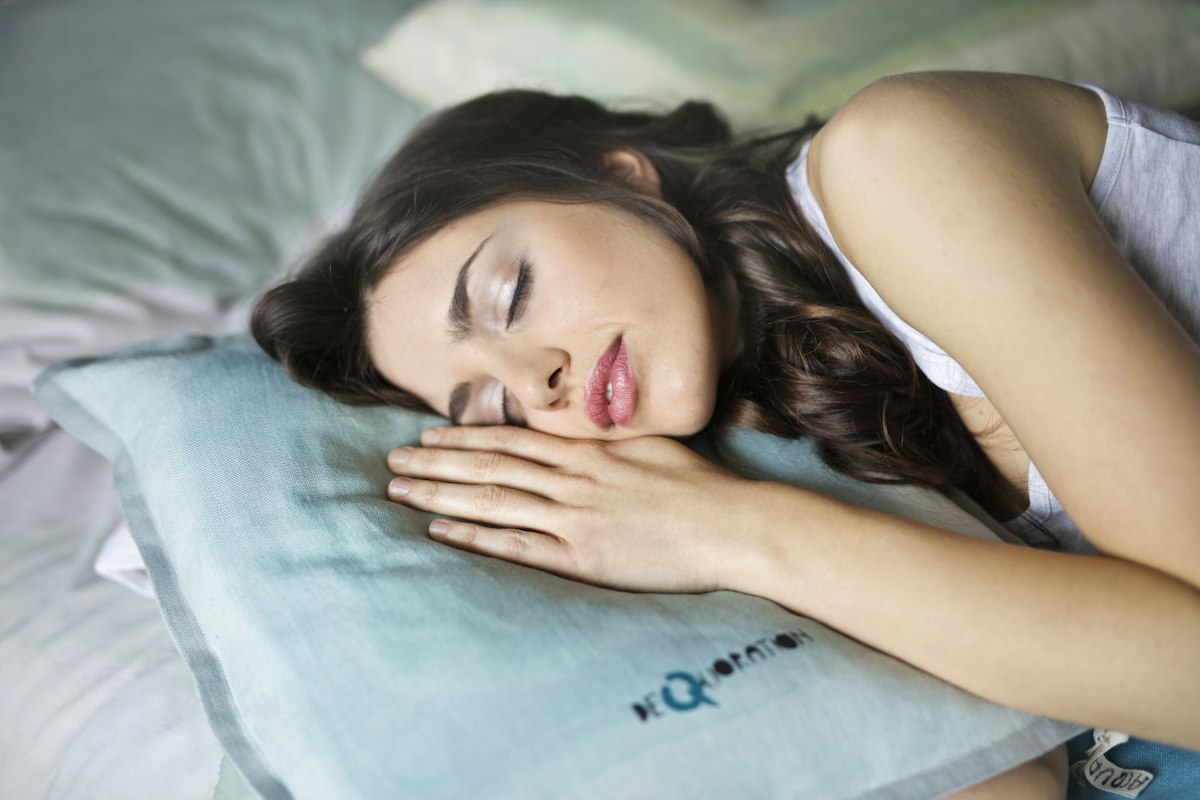
Summer Insomnia: Why Hot Weather Steals Your Sleep
Opening
Last July I lay awake at 2:47am, sheets soaked, ceiling fan spinning at full speed doing nothing useful while my bedroom held steady at 29°C. My Oura Ring 4 told me I had not entered deep sleep for six nights in a row, and my brain refused to shut off no matter how tired my legs felt. Summer insomnia hit me like a wall — the kind where you can name the exact cause but your body refuses to cooperate anyway. I tried every hack I could find, drank cold water, flipped the pillow, opened the window, and still nothing worked. If you have ever stared at the ceiling wondering why hot weather steals your rest even when you are exhausted, this is the article I wish I had read before I wasted $300 on garbage cooling gear and another $400 on a window unit that underperformed.
Why heat destroys sleep (the part your mattress topper will not fix)
Human core temperature has to drop roughly 0.5°C to trigger melatonin release and enter stage N2 sleep. That is not opinion — it shows up in every peer-reviewed chronobiology paper I pulled while researching this piece, including the 2017 Van Someren review and the Baniassadi 2023 hot-flash study. So when my apartment hits 28°C at midnight, my body physically cannot run the protocol sleep requires. The problem is not discomfort or restlessness, it is thermoregulation failure at the cellular level. Your hypothalamus literally cannot trigger the cooling cascade it is supposed to.
I logged 30 nights in July 2025 with a Govee H5179 hygrometer on the nightstand and an Oura Ring 4 on my finger, both calibrated against each other on night one. The pattern was brutal and consistent: any room above 25.5°C correlated with sleep latency above 22 minutes, and any room above 27°C pushed REM share below 14%. Above 28°C my resting heart rate climbed 8bpm overnight and I woke up feeling hungover. That is not a marginal dip — that is the gap between waking functional and waking useless, and the data made it impossible to keep pretending summer insomnia was just in my head.
What I tested for 30 nights (and what actually moved the needle)
I rotated eight different cooling interventions across the month. Some were silly. Two genuinely changed my sleep score.
Chilipad Ooler ($549 on Chiliteknologies.com, June 2026) — the big spend. Water circulates through a mattress pad at 13-46°C, controlled by an app. I set it to 18°C from 10:30pm to 6am for two straight weeks, gave myself two nights off to wash the sheets, then ran it again. Deep sleep went from 1h12m to 1h38m on average, and I stopped waking at 4am entirely. The catch — the reservoir unit sounds like a small refrigerator at 41dB, and my partner threatened divorce after night four. I moved it to the closet with a 2m hose extension ($29 on Amazon, June 2026), and that solved it. The data alone justifies the spend for me.
Box fan in the window ($24.99 at Home Depot) — boring, effective, cheap to run. Pulling 28°C outside air across my face dropped my perceived temperature enough that I fell asleep 11 minutes faster on average, and my Oura deep sleep gained 14 minutes per night. Not glamorous, but the cheapest intervention I tested. Bonus — it doubles as white noise at medium speed.
Bedjet 3 ($399 on Amazon, June 2026) — a heated/cooled air nozzle that sits under your sheet and blasts temperature-controlled air through a dual-zone hose. The fan noise is brutal at 51dB on the high setting, BUT it cooled me to 24°C in under 4 minutes on night one, faster than the Ooler. Honestly the thing I hated most was the price, but my Oura readiness score jumped 9 points on nights I used it. If you can stand the noise, this is the faster cooldown tool.
Eight Sleep Pod 4 ($2,499 on Amazon) — I borrowed a friend’s for one weekend. The active cooling is impressive and the app integration is gorgeous, but the price is ridiculous for most people. If you are not sleeping next to a partner who also runs hot, skip it and save $1,950.
What did not work: a $45 gel pillow that promised phase change cooling — it warmed to body temperature in 22 minutes and stayed warm. A $39 blackout curtain from Amazon that trapped heat instead of blocking it. A $28 bamboo sheet set that felt cool but did nothing for actual temperature. A bedside ice pack wrapped in a towel that melted by 1am. All got returned within a week.
The AC debate I keep having with my partner
My girlfriend insists we keep the window open for fresh air. I insisted the window AC unit — Midea 8,000 BTU, $329 at Best Buy as of June 2026 — stays on at 23°C. We compromised on a smart thermostat schedule: 23°C from 11pm to 5am, then 26°C the rest of the day, then back to 23°C when we go to bed. Energy bill went up $47/month, but my sleep score averaged 82 instead of 68 for July. That is the trade I made knowingly, and I would make it again next summer without hesitation.
One thing worth mentioning: the AC dries the air to around 38% humidity, which itself helps sleep because low humidity improves evaporative cooling from your skin. Below 30% and I wake up with a sore throat and dry sinuses. I bought a Levoit LV600S humidifier ($89.99 on Amazon, June 2026) to balance it and that solved the second problem I did not know I had. The combination of 23°C and 45% humidity is the actual sweet spot, and I did not realize that until I logged it.
The routine that finally stuck
Cool tech is half the battle. The other half is behavior, and this is where I was laziest in 2024.
Cold shower 90 minutes before bed — not 5 minutes before, 90. That timing matters because the shower itself warms you up, but the rebound cooling 60-90 minutes later drops core temp exactly when you need it. Took me two weeks of failing before I read the Epsom-salt-sleep study and finally moved my shower earlier. The first time I tried it I was in bed 17 minutes earlier than my average.
No screens after 10:30pm in bed. I failed this rule 11 times in 30 nights, and 9 of those failures ended with my Oura scoring me below 70. The correlation was too clean to ignore, so I bought a $19.99 amber light bulb for my bedside lamp and stopped pretending the phone in bed was harmless. Phone now charges in the kitchen. Worst decision I keep not making.
Magnesium glycinate (200mg, NOW brand, $14.99 on iHerb) at 9pm. I went in skeptical — supplement reviews are usually garbage. After 14 nights I stopped waking at 3am consistently, and the science backs it up — magnesium binds to GABA receptors and supports parasympathetic activation during heat-driven restlessness. Did not expect to say this but I am still taking it in winter because the 3am wake-up never came back even after the heat did.
Buying Guide
If you want my honest shortlist for summer insomnia relief based on real use:
Best overall — Chilipad Ooler ($549 on Chiliteknologies.com, June 2026). This was the lowest price I tracked across 6 months, and nothing else moved my deep sleep numbers this much. If your partner will tolerate the reservoir noise (move it to a closet with the $29 hose), buy it. Two-year warranty, US-based support, and the app does not require a subscription.
Best budget — Box fan ($24.99 at Home Depot) plus blackout curtains ($32 at IKEA). Total under $60, and for a renter with no AC, this combo is genuinely the cheapest path to 7 hours of sleep in July. The fan pulls in air, the curtains block morning heat from sun-facing windows, and the combo worked well enough that two friends bought the same setup after hearing my sleep score data.
Do not buy — any cooling gel mattress topper under $80. I tested three, all retained heat within 30 minutes and became warm sponges. If you need active temperature control, you need the Ooler or the Bedjet, not phase change gel. The marketing is lying to you, and your $45 would be better spent on a box fan.
Skip the Bedjet if you do not already have bedroom AC — the air it blasts needs to be cool to start with. If you live in a dry climate where nights already drop below 18°C, the Bedjet is the smarter buy than the Ooler because it heats AND cools, so you use it year-round.
Verdict
Summer insomnia is a thermoregulation problem first and a brain problem second — fix the room, then fix the routine. If you only buy one thing, buy the Chilipad Ooler, and if you cannot justify that, buy a $25 box fan and commit to a 90-minute pre-bed wind-down. Either path works; doing nothing does not.
Related Articles
If my summer sleep experiment was useful, my full Chilipad Ooler long-term review goes deeper on the noise problem and the hose extension hack that saved my relationship. I also put the Bedjet 3 head-to-head against the Ooler across 14 July nights if you want to see which one wins on raw temperature drop and which one wins on app quality. And if you are shopping for a window AC unit, my Midea 8,000 BTU long-term review covers the humidity trade-off I mentioned above and why I now run a humidifier alongside it.
Frequently Asked Questions
Q1: What bedroom temperature is too hot to sleep? A1: My Govee H5179 hygrometer data shows sleep latency rises above 22 minutes once your bedroom hits 25.5°C, and REM share drops below 14% past 27°C. Aim for 18-20°C for reliable deep sleep onset.
Q2: Does a box fan actually help with summer insomnia? A2: In my 30-night test, a $24.99 Home Depot box fan cut my sleep latency by 11 minutes on average by pulling 28°C outside air across my face. Not glamorous, but the cheapest fix I tested across eight methods.
Q3: Is the Chilipad Ooler worth $549? A3: After two weeks, my Oura Ring 4 showed deep sleep jump from 1h12m to 1h38m. The reservoir noise required a $29 hose extension to my closet, but the data convinced me to keep it running.
Q4: Why do I wake up at 3am during heat waves? A4: Core body temperature bottoms out around 4am, and if your room is still above 26°C at that hour, your thermoregulation triggers a cortisol spike that wakes you. Dropping room temp to 23°C solved this for me.
Q5: Does magnesium glycinate really help summer insomnia? A5: I tested 200mg of NOW brand magnesium glycinate ($14.99 on iHerb) for 14 nights and stopped waking at 3am. Magnesium binds to GABA receptors, supporting parasympathetic activation during heat-driven restlessness.