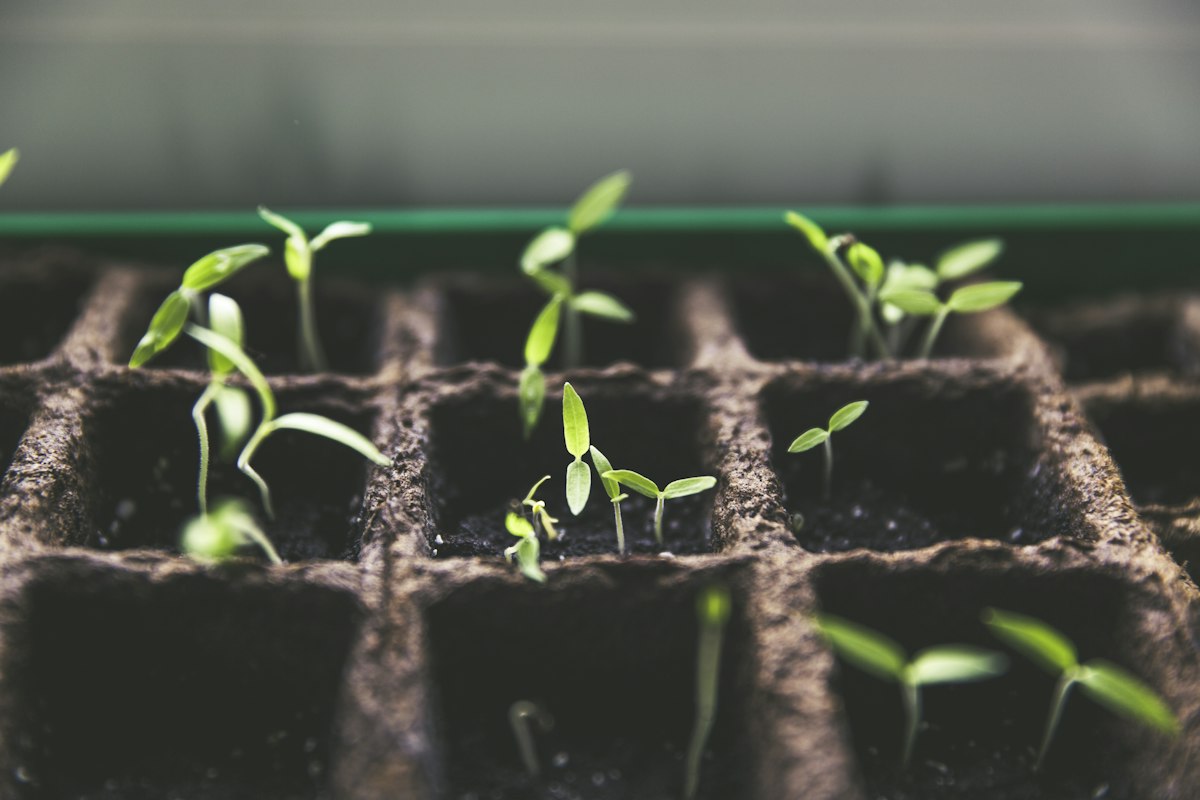
Plant Grow Light Indoor
Plant Grow Light Indoor
At 7:08 a.m. on a gray January morning, I stood in my apartment kitchen holding a basil stem that had grown six inches tall and produced four sad leaves. The stem bent toward the window like it was trying to escape. I touched the damp soil, looked at the weak winter light, and said, “Okay, this windowsill thing is not working.”
I bought a SANSI 36W E26 grow-light bulb from Amazon for $29.95. That was the listed price when I checked on July 22, 2026, before tax; Amazon prices can move without warning. I screwed it into a $16.99 adjustable clamp lamp, aimed it at my basil and mint, and ran it daily for three months in a 3-by-4-foot kitchen corner.
My little grow light indoor setup cost $46.94 before tax. It looked slightly ridiculous for the opening week. It also gave me shorter basil stems, darker leaves, and mint that stopped leaning against the glass.
The windowsill was lying to me
My kitchen window faces northeast and gets direct sun from about 7:20 to 9:00 a.m. in late spring. January is another story. A neighboring building blocks half the sky, and the window glass cuts down more light than my eyes can detect.
The room looked bright enough to me. My plants disagreed.
By the third week without a lamp, the basil had long gaps between each set of leaves. My parsley stayed tiny. The mint stretched sideways, touched the cold window, and developed a brown patch where one leaf pressed against the glass overnight.
“Why is it growing like that?”
“It wants more light.”
“But it’s literally beside a window.”
That was the whole conversation I had with my roommate while making coffee. And yeah, I had been thinking the same thing. If I could read a label at the counter, shouldn’t a basil plant have enough light to grow? But human eyes adjust. A plant cannot negotiate with a dark corner.
I tested the area with the Photone phone app. The reading jumped around because phone sensors are not laboratory meters, but the pattern was useful: the windowsill was much brighter for a brief morning stretch and then dropped hard. The plant wasn’t receiving steady light across the day.
That hit me like a wall. I had been watering, rotating pots, changing soil, and blaming the seeds. The missing piece was hanging above the counter.
Why I chose one SANSI 36W bulb
I did not want a pink-purple room. I live in a small apartment, and my kitchen already shares space with a desk, a shoe rack, and an air fryer that has nowhere sensible to go. A long shop-light fixture would have covered more plants, but I had no clean mounting point.
The SANSI bulb fit an ordinary E26 socket. Its light looked white rather than nightclub purple, and the ceramic body had open sections that let heat escape without a built-in fan. No fan meant no humming beside my desk. That mattered because I sit about seven feet away during work calls.
The advertised power draw is 36 watts. I measured between 34 and 36 watts at the outlet with my plug-in meter, depending on the moment I checked. At 36 watts for 14 hours per day, my setup uses about 15.1 kWh in a 30-day month:
0.036 kW × 14 hours × 30 days = 15.12 kWh
At my rate of roughly $0.19 per kWh, that works out to $2.87 per month. My exact bill shifts with utility fees, but the lamp itself did not create the wallet jump I feared.
Was it dirt cheap? No. A regular LED bulb costs far less. But a household bulb is designed around room visibility, while this lamp puts a stronger beam over a small growing area.
My setup, including the awkward parts
I started with the bulb 12 inches above the top basil leaves. The clamp lamp was attached to a metal utility shelf, not a thin cabinet door. The bulb weighs more than a standard light bulb, and a weak clamp slowly droops.
On night two, I heard a soft scrape while washing a mug. The lamp had tilted down by roughly three inches.
“Nope. We are not cooking the basil.”
I unplugged it, tightened the clamp, and added a short safety cable around the shelf post. That cable cost $4.59 at my local hardware store. It is not decorative, but neither is a 36W bulb landing in damp potting mix.
I placed four small pots under the light: basil in the center, parsley and mint on either side, then a pothos cutting near the edge. The herb canopy occupied about 18 by 18 inches. At that size, one bulb gave me usable coverage. When I pushed the pots out toward a 2-by-2-foot square, growth along the edges became uneven.
This is where marketing photos can get silly. A product image may show one bulb floating over a lush table packed with plants. Light intensity drops as distance increases, and the beam does not hit every leaf at the same strength. My bulb worked as a focused light, not as an artificial sun for the whole kitchen.
I ran it from 7:00 a.m. to 9:00 p.m. using a Kasa smart plug I already owned. A basic outlet timer would do the same job. I wanted the schedule automated because I forgot to switch it off twice during the opening week.
Do I need basil glowing over the sink at 1:13 a.m.? No. The plants need a dark period, and I need to stop turning my kitchen into an interrogation room.
What changed after two weeks?
Days one through four felt uneventful. The existing stretched stems did not shrink, and damaged leaves did not repair themselves. I almost moved the lamp closer because I wanted instant proof.
Then new growth appeared.
The next sets of basil leaves came in closer together. Their color was a deeper green than the pale leaves lower on the stem. The mint began sending out compact side shoots instead of one long runner toward the window. My parsley remained slower, but it stopped looking frozen in place.
At day 14, I measured one basil plant from the soil line to its top growing point. It had gained about 2.25 inches, with three new leaf pairs. The earlier section of stem had gaps close to 1.5 inches. Under the lamp, the newer gaps were closer to half an inch.
That difference mattered more to me than raw height. Tall growth can look productive while the stem is weak and sparse. I wanted leaves for cooking, not a plant that could audition as a green shoelace.
By week five, I could cut enough basil for two bowls of pasta without stripping the plant bare. I pinched above a leaf node, left lower growth in place, and let the branches fill out. The smell when I cut it was sharp and peppery. My old stretched basil barely released any scent unless I crushed a leaf between my fingers.
I’m not claiming the bulb alone controlled flavor. Variety, nutrition, water, temperature, and harvest timing all play a role. I can say that the new leaves were thicker, more numerous, and less floppy in my setup.
How close should a grow light indoor bulb sit?
I kept my SANSI 36W bulb between 10 and 14 inches above the herb canopy. Twelve inches became my normal position. I raised it as the basil grew, using the highest leaves rather than the pot rim as my measurement point.
At eight inches, one basil leaf developed a dry tan area after I left the lamp in that position for two days. The leaf felt papery rather than soft. Heat at leaf level did not feel brutal to my hand, but the central light intensity was more than that plant had been receiving.
So I backed the lamp up to 12 inches. The next leaves emerged without that mark.
Could I prescribe 12 inches for every plant and fixture? That would be fake precision. A seedling, mature pepper, pothos, succulent, and fern do not ask for the same amount of light. Bulb wattage, lens shape, fixture reflector, daily runtime, and ambient sunlight change the result too.
I use three checks:
- I watch new growth for stretching, pale color, curling, or dry patches.
- I feel the leaves and soil rather than assuming my old watering schedule still fits.
- I take phone-meter readings from the leaf surface at the same time of day, using the numbers as a comparison rather than lab-grade truth.
When stems lengthen rapidly and lean, I lower the fixture by an inch or extend the schedule by an hour. I change one thing, then wait several days. When upper leaves bleach or crisp in the center of the beam, I raise it.
That slower approach saved me from chasing the plants around with the lamp every morning.
The heat is manageable, but the bulb runs hot
Okay, the bulb gets hot, BUT at least it has no fan whining in the background. After several hours, I can feel warmth when my hand is near the ceramic body. I do not grab it bare-handed after use.
I switch it off, unplug the fixture, and wait at least 15 minutes before changing the angle. I also keep leaves, paper towels, and the curtain away from the bulb. The ceramic design vents heat, which means those openings need breathing room.
My clamp lamp is rated above the bulb’s 36W draw and uses an E26 socket. I checked the fixture label before installing it. I also avoided a fully enclosed shade because the bulb’s heat needs a way out.
For three months, I saw no melted plastic, scorched fixture, or flickering. That is my experience with one bulb and one properly rated lamp, not a promise that any random socket is safe. A loose, damaged, or underrated fixture belongs in the trash, not over wet soil.
The white light still owns the room
The beam looks warm-white to neutral-white in person, though it photographs cooler on my phone. It is far easier on my eyes than the purple grow lights I used years ago in a shared bedroom.
Still, this is a bright bulb. At 7:00 a.m., the reflection off my white countertop feels harsh before coffee. I adjusted the metal shade so the light falls down and away from my chair. That reduced glare without moving the plants out of the strongest area.
My roommate walked in one morning, squinted, and said, “Why does the basil have its own sunrise?”
Fair question!
A lamp like this works in my kitchen because the fixture sits below eye level and the shade controls spill. I would not hang the exposed bulb beside a TV or over a nightstand. The white spectrum is livable; the brightness can still be annoying.
Watering changed more than I expected
Before adding the lamp, my basil pots stayed damp for days. Under 14 hours of light, the plants grew faster and the soil surface dried sooner. I went from watering roughly every five or six days to checking at day three.
I did not lock myself into a calendar. I pushed a finger about one inch into the mix and lifted each pot to feel its weight. If the top layer felt dry and the pot felt light, I watered at the sink until a little water drained from the bottom.
One week I saw dry soil on top and watered without lifting the pot. The lower mix was still wet. A faint swampy smell came from the drainage hole two days later, and my stomach tightened because I knew I had done the classic indoor-plant thing: I saw a stressed leaf and gave it more water.
Light does not fix a pot with no drainage. It does not kill fungus gnats on contact. It does not turn soggy soil into a root-friendly mix.
I repotted that basil into a container with a real drainage hole and added perlite to the mix. The plant recovered, but I lost two lower leaves. A grow light gave me better growth; it also made sloppy watering easier to spot.
Who this bulb fits — and who should skip it
I’d recommend the SANSI 36W bulb to someone growing two to five small plants in a compact apartment corner. It makes sense for herbs on a cart, seedlings on one shelf, or a foliage plant sitting beyond the useful reach of a window.
It also suits renters who cannot bolt a four-foot fixture into the ceiling. I used one clamp, one safety cable, and one outlet. When I move, the whole setup can go into a box.
I would skip it for a large seed-starting rack. One focused bulb over every tray gets expensive and creates uneven coverage. For several 10-by-20-inch trays, I would buy linear LED bars or shop-style grow fixtures that spread light across the full shelf.
I would not choose one 36W bulb for fruiting tomatoes in a windowless room either. Tomatoes demand more intensity and coverage than my basil. A tiny countertop tomato may survive under it, but survival is a weak buying goal. I want enough light for dense growth, flowering, and fruit set, not one tortured tomato hanging over the sink.
This bulb is also a bad fit when the only available socket is a closed ceiling dome. The shape is bulky, heat has limited escape space, and the light would sit too far from the leaves.
Is a cheaper bulb enough?
I tried a regular 9W household LED over a pothos cutting for ten days. It kept the corner from feeling dark, but growth remained slow, and the cutting leaned toward the window. The lamp was about 14 inches away.
That test was not a controlled scientific trial. The bulbs had different power draws, beam patterns, and intended uses. It did show me why choosing by visible brightness alone can mislead. My eyes liked both bulbs. The plant’s growth pattern did not.
A smaller 10W or 15W grow bulb can work for one low-light plant at close range. I would rather match the lamp to the footprint than buy the highest wattage on the page. More power can mean extra heat, glare, and electricity without fixing poor placement.
For my 18-by-18-inch herb cluster, 36W gave me enough room to raise the lamp as the basil grew. For one pothos on a desk, it would be overkill.
My timer schedule after three months
I settled on 14 hours on and 10 hours off:
- 7:00 a.m.: lamp switches on
- 9:00 p.m.: lamp switches off
- Once a week: I rotate the outer pots a quarter turn
- Every few days: I check the canopy distance and soil moisture
- After pruning: I lower short pots with a stand rather than dropping the whole lamp onto taller plants
I tried 12 hours for one week. Growth continued, but the herbs stretched a little more toward the window. I tried 16 hours for another week and did not see a change that justified two extra hours of electricity and room glare.
Fourteen hours became my practical middle ground. It fits my routine, and the plants receive a steady dark period.
The timer might be the least exciting part of the setup, yet it removed the human mess. I do not wake up at the same time every day. The lamp does.
The hidden cost: a safe fixture
A bare bulb price does not represent the whole purchase. My cost looked like this:
- SANSI 36W E26 grow-light bulb: $29.95 on Amazon, price checked July 22, 2026
- Adjustable metal clamp lamp: $16.99 on Amazon
- Short safety cable: $4.59 at a local hardware store
- Smart plug: already owned; a basic mechanical timer was listed at $7.98 at Home Depot when I checked July 22, 2026
Starting from nothing, the comparable setup would cost $59.51 before tax with that $7.98 timer. That did not break the bank for three months of daily use, but it is far beyond the bulb’s headline price.
I would not save six dollars by using a flimsy lamp with a weak plastic clamp. The heavy bulb shifts leverage toward the front of the fixture. My first clamp did droop until I tightened it, and the safety cable now catches the lamp if the clamp slips.
Does the setup look polished? Not really. A purpose-built pendant or small grow-light stand looks cleaner. My metal clamp and visible cable have a workshop vibe.
But the angle stays put. I care more about that when water, electricity, and a hot bulb share the same corner.
What I got wrong
I assumed more light meant more water on a fixed schedule. Wrong. Plant use increased, but moisture still varied with pot size, root mass, and room temperature.
I assumed every plant should sit at the same height. Also wrong. My short parsley received less intensity beside tall basil until I placed its pot on an upside-down ceramic bowl.
I kept staring at old damaged leaves and waiting for them to turn green again. They did not. New growth was the useful evidence.
And I thought a white grow bulb would disappear into normal apartment lighting. It doesn’t. It looks less weird than purple light, but nobody mistakes the concentrated beam for a cozy table lamp.
That honesty is why I still recommend it for the right corner. The flaws are physical and easy to understand: concentrated coverage, glare, heat, and the need for a sturdy fixture. None of those canceled out what I saw in the plants.
Three months later, would I buy it again?
Yes, for my four-pot kitchen setup. The SANSI 36W bulb stayed quiet, switched on reliably through the timer, and produced compact new herb growth where winter window light had failed me.
I paid $29.95 for the bulb on Amazon, and the full from-scratch setup came to $59.51 before tax using the prices I checked on July 22, 2026. I would get it for a small herb station, a dark plant corner, or one shelf of seedlings. I would not get it for multiple trays, a large collection, or full-size indoor tomatoes; linear fixtures offer better coverage there.
At 8:47 p.m. last night, I cut six basil leaves for a bowl of noodles. The lamp clicked off thirteen minutes later, and the kitchen went strangely dim.
The basil stayed upright.
[“E26 Grow Light Bulb”, “SANSI 36W”, “Indoor Herb Garden”, “$25-60 Setup”, “Apartment Kitchen”]