When It Gets Dark at 5 PM: Why Autumn and Winter Low Energy Is Biology, Not Laziness
I wonder if you have noticed the same pattern over the last few weeks.
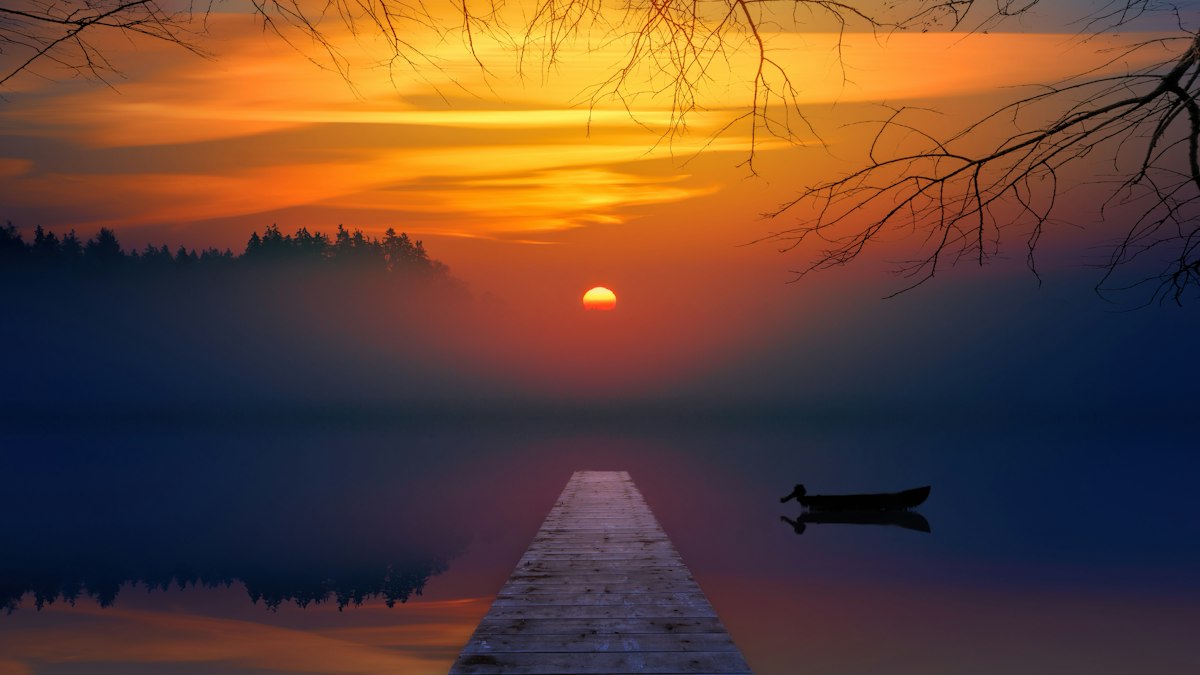
When you walk out of the office building at the end of the workday, the sky is already completely dark. Back in June, the sun was still high enough at that hour to warm your shoulders while waiting at the crosswalk. Now, barely past five in the afternoon, streetlights flicker on against an ink-gray horizon. Even when you slept a solid seven or eight hours the night before and did nothing unusually strenuous at your desk, arriving home after dark makes you feel as though someone quietly unplugged your battery. All you want to do is crawl under a blanket and stare at the ceiling. On weekends when you used to love meeting friends for spicy hotpot or wandering through neighborhood markets, even the thought of putting on a coat feels strangely heavy. Meanwhile, your social feed continues to glow with acquaintances posting sunny weekend trips and energetic gym check-ins—making the quiet inertia in your living room feel almost shameful by comparison.
Soon enough, the inner prosecutor steps forward: Why have I grown so lazy lately? Why don’t I have an ounce of self-discipline anymore?
Hold back that accusation for a moment. If there is one thing both lived experience and clinical chronobiology agree on, it is this: you are not lazy, and your willpower has not suddenly eroded; winter has simply turned down your biological energy dial.
Photoperiods, the Suprachiasmatic Nucleus, and Neurochemistry
This sensation is not a convenient excuse invented to comfort tired office workers. Inside the human brain sits a master biological pacemaker known as the suprachiasmatic nucleus (SCN), tucked within the hypothalamus directly above the optic chiasm. Every morning and evening, the SCN relies on one primary environmental input to calibrate your entire twenty-four-hour physiological schedule: light reaching specialized photoreceptors in your eyes.
When bright morning light hits your retinas, neural signals travel directly to the SCN, triggering a clear biological instruction: Daytime has begun. In response, the pineal gland suppresses melatonin synthesis, core body temperature begins climbing, cortisol rises in a natural waking curve, and neural arousal circuits switch online. Conversely, when dusk arrives before five o’clock in late autumn and winter, that daytime signal vanishes prematurely. Your hypothalamus interprets the early absence of daylight as a cue to shift toward biological night, prompting earlier melatonin release, dampening alertness, and lowering baseline energy hours before you actually intend to sleep.
Reduced daily light exposure also alters a second critical neurotransmitter system: serotonin, which helps regulate emotional stability, motivation, and satiety. Research on seasonal mood shifts shows that when total photoperiods shorten in November and December, serotonin transporter activity fluctuates in ways that reduce daytime synaptic availability in susceptible individuals. In public health frameworks overseen by national mental health institutes such as NIMH, the severe end of this continuum is recognized as Seasonal Affective Disorder (SAD)—a well-documented clinical condition characterized by mood, sleep, and energy patterns rising and falling reliably with the calendar. What you interpret privately as “being unmotivated,” “having zero drive,” and “wanting only to hibernate” is largely hormone and neurotransmitter signaling responding honestly to diminished sunlight.
The “Hibernating Snake” and Light-Starved Office Life
I know a woman in her early thirties who embodies this annual shift like clockwork. From April through September, she is decisive, crisp in meetings, and quick to organize weekend outings. Yet the moment November winds begin blowing and darkness falls during the evening commute, she looks as though an invisible hand has dimmed her internal voltage.
“I feel like a hibernating snake,” she told me once with a tired laugh. “My mind keeps shouting at my body to get up, clean the kitchen, and answer messages, yet nothing moves.” For years she diagnosed herself with moral weakness—assuming she was secretly undisciplined or overly dramatic—until a physician walked her through circadian light deprivation.
Even in mid-latitude cities, modern indoor routines inadvertently engineer extreme sunlight starvation during winter. Think about an average Tuesday: you leave your apartment before high-angle daylight strengthens, spend eight to ten hours sealed beneath 300-lux fluorescent ceiling tubes far from exterior windows, and exit the building after six when the street is already dark. Across an entire workday, your retinas may capture fewer photons of natural sky light than a houseplant sitting on an apartment sill. Without a strong daytime contrast signal, the SCN blurs the boundary between waking vigor and evening drowsiness. For a deeper technical look at how indoor brightness compares with outdoor luminance, see our companion guide on Circadian Light Hygiene: How Morning Sunlight and Evening Darkness Anchor Your Sleep Architecture and our physics breakdown of The 10,000-Lux Light Therapy Protocol.
Notice the two-layer trap we build for ourselves: the first layer is seasonal biological slowing, which is tolerable on its own; the second layer is self-condemnation—Why am I so useless when everyone else seems fine? That secondary shame drains far more emotional fuel than the shorter days ever could.
Distinguishing Seasonal Fatigue from Clinical Depression — and Knowing the Boundary
Before turning to practical adjustments, honesty requires drawing clear clinical lines. Not every low-energy November evening is Seasonal Affective Disorder, and not every winter slump can be resolved solely through lifestyle tweaks.
Ordinary seasonal sluggishness—sometimes called the “winter blues”—tends to feel like mild afternoon heaviness, slower mornings, and a modest drop in evening sociability that still lifts temporarily during engaging weekends or bright midday walks. By contrast, true clinical SAD exhibits a distinct recurring pattern across consecutive years:
- Predictable Seasonal Onset and Remission: Symptoms emerge reliably in late autumn or early winter for weeks at a time and remit cleanly when spring daylight lengthens.
- Hypersomnia Without Restoration: Total sleep duration stretches to nine or ten hours, yet waking still feels leaden and non-restorative.
- Pronounced Carbohydrate Cravings and Weight Fluctuation: A sharp physiological pull toward starchy or sweet comfort foods in the afternoon and evening.
- Broad Social and Motivational Withdrawal: Pulling back from nearly all regular interactions rather than simply preferring quieter nights.
More importantly, a firm safety boundary sits beyond self-care. If your low mood deepens into persistent hopelessness, near-total inability to feel pleasure in anything, inability to sustain work or basic self-care for consecutive weeks, or any thoughts of self-harm, step past self-help immediately and consult a licensed physician, psychiatrist, or mental health professional. Behavioral routines are supportive tools for circadian alignment, never a substitute for clinical diagnosis and treatment. If you ever feel unsafe or overwhelmed in crisis, reach out immediately to emergency services or call/text 988 in the US and Canada (or visit international crisis directories via Find A Helpline).
Five Low-Friction Habits to Coax Your Winter Energy Back
Telling someone in a mid-November energy dip to “just push harder with willpower” works about as well as ordering a feverish patient to stop shivering. Instead of fighting your nervous system head-on, arrange your day around light contrast, gentle physical momentum, and lower friction:
- Step into natural outdoor daylight within one to two hours of waking. Sitting behind triple-pane office glass blocks a substantial fraction of helpful light wavelengths and reduces brightness drastically. Let open-air sky light reach your eyes during your morning commute, while walking to pick up coffee, or by getting off the bus or subway one stop early. Even on heavily overcast winter mornings, outdoor light intensity stays several times higher than bright indoor office lighting—giving your SCN the morning calibration it needs.
- Shift your workspace closer to a window and tie movement to your commute. Moving a desk from an interior cubicle wall to a window seat—or taking a brisk twenty-minute walk outside around noon—reinforces midday serotonin and alertness signaling. On rainy or freezing days when summoning motivation for a dedicated gym session feels impossible, do not force an all-or-nothing rule: anchor movement to getting home by walking the last twenty minutes of your commute, or on your heaviest days simply stand beside an open window for ten minutes looking out at the daytime sky. Every real minute of natural light counts.
- Practice active evening light dimming after sunset. Because circadian timing depends on the contrast between bright days and dim nights, getting strong morning sun loses half its power if you blast your retinas with blue-white phone screens and overhead LEDs at 11:00 PM. Lying in bed scrolling short-form video feeds tells your hypothalamus that daytime is still underway—then leaves you wondering why you lie awake restless despite feeling drained all evening. Switch to warm, low-level table lamps an hour before bed and keep a consistent sleep-wake anchor even on weekends.
- Preserve one low-pressure social anchor instead of going completely dark. Low energy whispers that you should cancel every plan and isolate until April. Complete isolation removes external rhythm cues and deepens rumination. You do not need loud parties or forced small talk; pick one or two people you trust for a quiet weeknight meal or a brief evening phone call while pacing the living room.
- Supply steady raw materials and protect your margins. Rather than chasing afternoon slumps with late sugar spikes that crash an hour later, include consistent dietary sources of tryptophan (such as oats, walnuts, eggs, warm milk, bananas, and legumes) alongside balanced protein, and ask your doctor whether checking Vitamin D levels makes sense during dark winter months.
Allowing Yourself to Move at Winter Speed
From early school years onward, we are conditioned to admire uniform, year-round productivity—as though human biology ran on wall-socket electricity rather than seasonal rhythms. Yet no living organism operates at peak summer output in late November. You would never stand under a bare oak tree in December and scold it for lacking ambition because it dropped its leaves; do not interrogate your character simply because your energy dips when dusk falls at 5:00 PM.
Pull back your curtains tomorrow morning and step outside for ten quiet minutes before work. On evenings when the dark settles early and your battery sits low, dial back non-essential expectations by ten percent without turning quiet rest into self-hatred. Working alongside your circadian biology—instead of endlessly fighting it—is how you protect your steadiness until longer, brighter evenings return.
This essay blends lived reflection with established chronobiology and public health education. It is intended for informational self-care and does not constitute medical diagnosis or clinical care. If persistent depressive symptoms interfere with daily life, please consult a qualified healthcare professional.
Research Methodology & Public References
First-person lived-experience reflection synthesized with circadian photobiology, clinical seasonal affective disorder literature, and public mental health guidance.
- National Institute of Mental Health (NIMH): Seasonal Affective Disorder (SAD) Clinical Overview
- American Psychological Association (APA) Stress & Emotion Research
- American Journal of Psychiatry: The Efficacy of Light Therapy in the Treatment of Mood Disorders (Golden et al.)
- Public Youth & Workplace Mental Health Survey Reports (2025-2026)