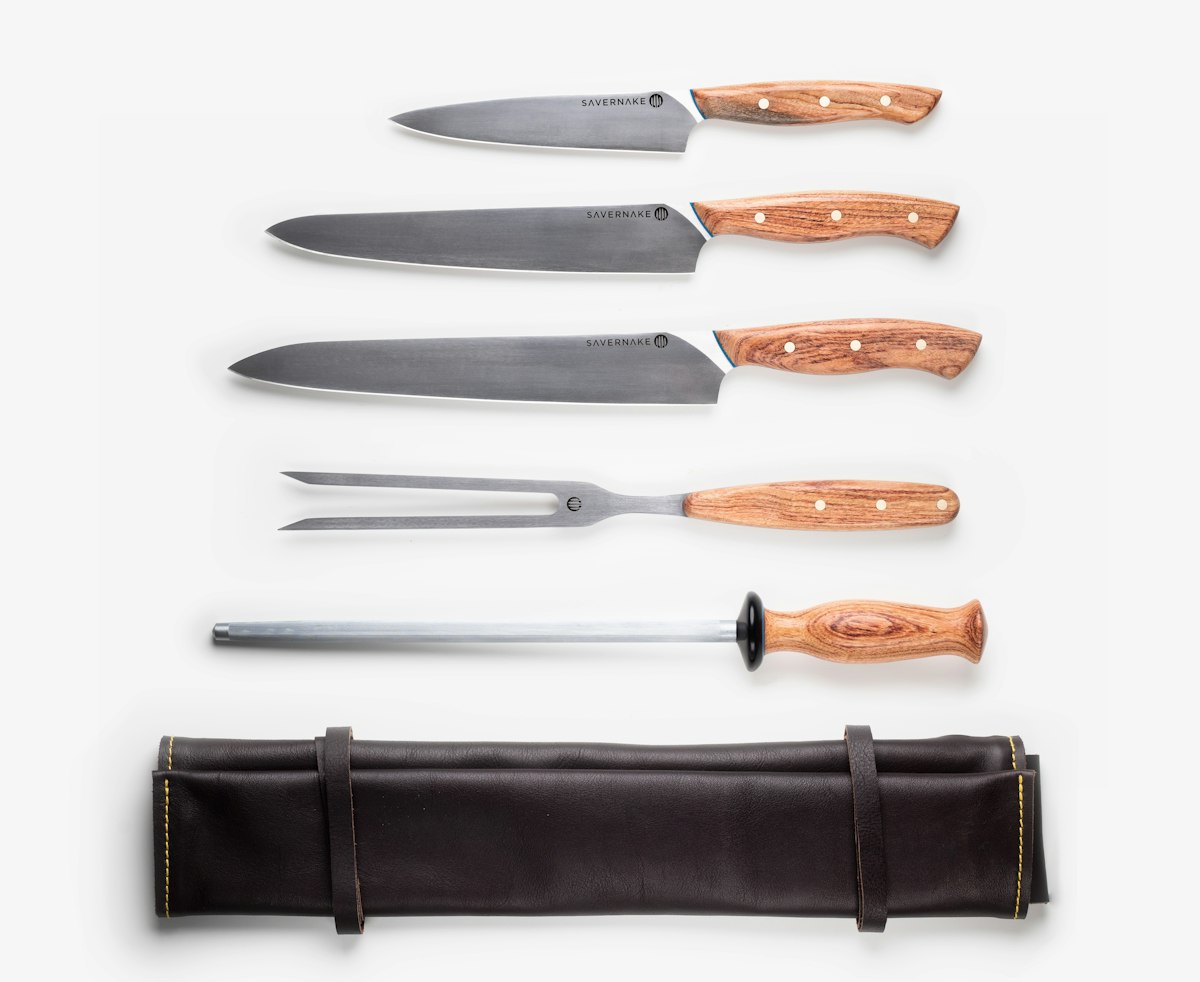
Kitchen Knife Sets: What Cooking Resources and Buyer Reviews Describe
Kitchen knife sets are a common kitchenware purchase. This summary pulls from cooking resources, food safety references, and aggregated buyer reviews to identify what features and considerations distinguish this category.
This article does not claim personal testing of any specific knife set. The information below reflects what published cooking guidance and aggregated buyer feedback typically report.
Blade Materials
Common kitchen knife blade materials:
Stainless steel: Most common in mid-range and consumer sets. Stainless steel balances corrosion resistance, edge retention, and ease of sharpening. Reviews consistently note stainless steel as the most practical material for everyday kitchen use.
High-carbon stainless steel: Premium option (e.g., VG-10, SG2). Reviews note better edge retention and easier sharpening but slightly more brittleness.
Carbon steel: Traditional choice. Excellent sharpness and edge retention but requires more maintenance to prevent rust. Reviews note carbon steel is preferred by professional chefs but less practical for many home cooks.
Ceramic: Lightweight and very hard, holding edge well. Reviews consistently note that ceramic knives are very brittle and chip or break more easily than steel. Also harder to sharpen at home.
Damascus (layered steel): Often VG-10 or similar core with layered outer steel. Reviews note the layered pattern is largely aesthetic; performance depends on the core steel.
Buyer reviews consistently rate high-carbon stainless steel as the best balance for home cooks who want quality without excessive maintenance.
Handle Materials
Handle materials vary and affect grip, durability, and aesthetics:
Wood (Pakkawood, walnut, etc.): Traditional, warm aesthetic. Reviews note wood handles are comfortable but require occasional oiling and can crack with prolonged water exposure.
Composite/resin: Common in mid-range and higher-end sets. Durable, water-resistant, often dishwasher safe.
Stainless steel: Sleek aesthetic, very durable. Reviews note stainless steel handles can be slippery when wet.
Plastic: Common in lower-priced sets. Most affordable but generally less durable and ergonomic.
Reviews consistently rate composite handles as the most practical for daily use.
Common Set Configurations
Standard kitchen knife set configurations:
Minimalist (3 pieces): Chef’s knife, paring knife, utility knife. Suitable for users with limited storage.
Standard (5 to 6 pieces): Adds bread knife and sometimes a santoku or boning knife. The most common configuration.
Extended (8 to 12+ pieces): Adds steak knives, kitchen shears, and other specialized tools. Often includes a block or storage.
Block sets: Include a wooden block for storage. Reviews note that block sets often include knives users don’t actually need.
Reviews consistently note that most home cooks use only 2 to 4 knives regularly (chef’s knife, paring knife, bread knife, utility or santoku). Sets with many knives often include duplicates or knives that sit unused.
Sharpness and Edge Retention
Knife sharpness and edge retention depend on:
- Steel hardness (Rockwell scale)
- Edge geometry (angle, grind)
- Steel quality and processing
- Use and maintenance
Reviews consistently note that edge retention varies significantly across price ranges. Higher-end knives maintain sharpness longer but require more care to maintain and re-sharpen.
Care and Maintenance
Buyer reviews consistently identify several care practices that extend knife life:
- Hand washing (most knives, even those labeled dishwasher safe, last longer with hand washing)
- Drying immediately after washing (especially for carbon steel)
- Honing with a rod before or after use to maintain alignment
- Periodic sharpening with whetstone or professional service
- Storing properly (knife block, magnetic strip, or in-drawer organizer)
Reviews note that the most common reason for knife replacement is dullness that owners don’t address through sharpening. Regular maintenance substantially extends knife life.
Common Reasons for Return
Aggregating the most-mentioned issues across buyer Q&A:
- Knives arriving dull or with poor edge retention.
- Handles cracking or separating from blades.
- Knives rusting despite advertised as stainless.
- Set including knives users don’t need (driving up cost).
- Block or storage not fitting user’s drawer or counter space.
These five issues account for a disproportionate share of returns in this category.
Food Safety Considerations
The FDA’s food contact materials guidance addresses the safety of kitchen utensils. Stainless steel and food-grade composite handles are generally considered safe. Reviews note that knife handles with cracks or separation from the blade can harbor bacteria and should be replaced.
For raw meat preparation, the FDA recommends using separate cutting boards and washing knives thoroughly between uses. Knife sets used for both raw meat and ready-to-eat foods should be thoroughly washed between uses.
What the Evidence Does Not Support
There are claims about kitchen knives that outrun the evidence:
- That expensive knives always perform better for home use. Mid-range knives from reputable manufacturers often perform comparably for most home cooking tasks.
- That any specific brand is universally best. Knife preferences are highly individual.
- That block sets are always the best value. Reviews note that buying individual knives often provides better quality for similar cost.
Sources and Further Reading
- Consumer Reports’ kitchen knife coverage.
- Wirecutter’s knife recommendations.
- FDA food contact materials guidance.
These references are publicly verifiable, and the claims in this article are drawn from this kind of public material. No claim is based on first-hand testing of a specific knife set by the author.